
To determine if a specific product will yield results, you must understand how ingredients interact with human biology. Does topical collagen work when applied superficially? Yes, but only as a temporary surface hydrator. For deeper, lasting benefits, the ingredients must be engineered to bypass the body’s natural epidermal defences.
Can Skin Absorb Collagen? Understanding the Barrier
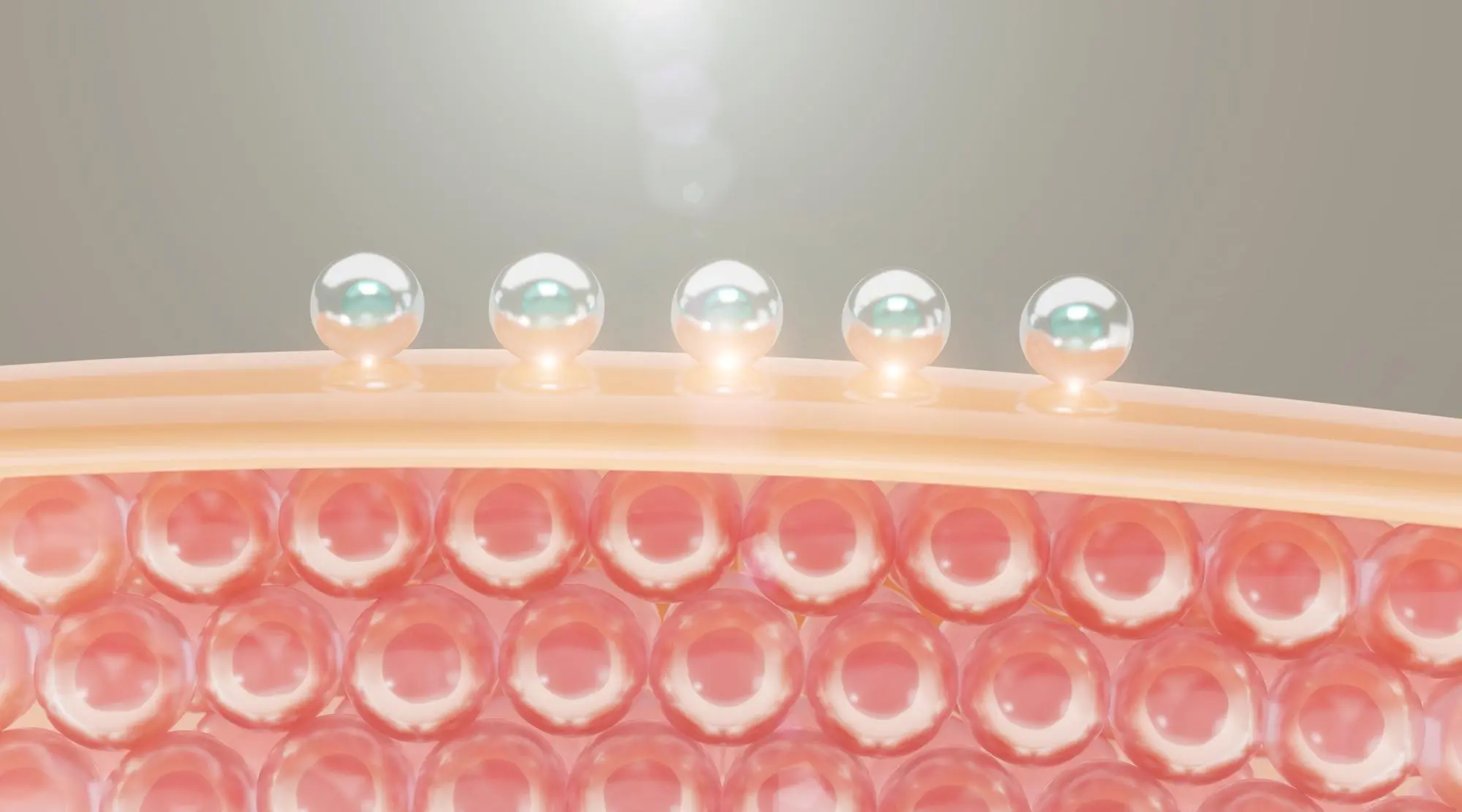
Before spending money on expensive moisturisers, you need to know if the human body actually allows these ingredients inside. Your skin functions as an incredibly efficient biological shield. Its primary evolutionary job is to keep water locked inside the tissue while keeping environmental pathogens, pollutants, and large foreign bodies out.
The outermost layer of this shield is the stratum corneum. This layer consists of dead, flattened cells known as corneocytes, tightly bound together by a dense matrix of lipids. This brick-and-mortar structure is highly selective about what it lets through. Researchers publishing in the journal Dermato-Endocrinology have mapped this exact barrier function, proving that the human epidermis is designed to repel heavy molecular structures.
When you ask, “Can skin absorb collagen?” you must look at the size of the protein itself. Native collagen is a massive, tightly wound triple-helix protein. When applied to the skin barrier, it simply sits on top of the corneocytes. It cannot squeeze through the microscopic lipid channels. Therefore, if you want to know the answer to the lingering question (“Does collagen absorb into skin?), the answer depends entirely on whether the manufacturer has altered the raw ingredient to make it biologically compatible with the human epidermal barrier.
The Science of Absorption: The Molecular Size Threshold
To understand formulation efficacy, we must look at how cosmetic chemists measure molecular weight. In dermatology, molecular size is measured in Daltons. This measurement is the absolute key to understanding collagen molecular size skincare formulations.
In the year 2000, researchers published a benchmark study in the Journal of Experimental Dermatology detailing the strict parameters required for topical penetration. They established the 500 Dalton rule, stating that only molecules weighing under 500 Daltons can freely pass through the human corneal layer.
If you want to know exactly what molecular weight can penetrate skin, 500 Daltons is the definitive scientific baseline. Anything larger requires mechanical assistance, chemical enhancers, or will simply remain trapped on the surface. To put this into perspective, a standard native collagen molecule has a molecular weight of around 300,000 Daltons. It is 600 times too large to pass the test. This massive size disparity dictates why so many expensive commercial products fail to deliver on their marketing promises.
Why Collagen Creams Don’t Work
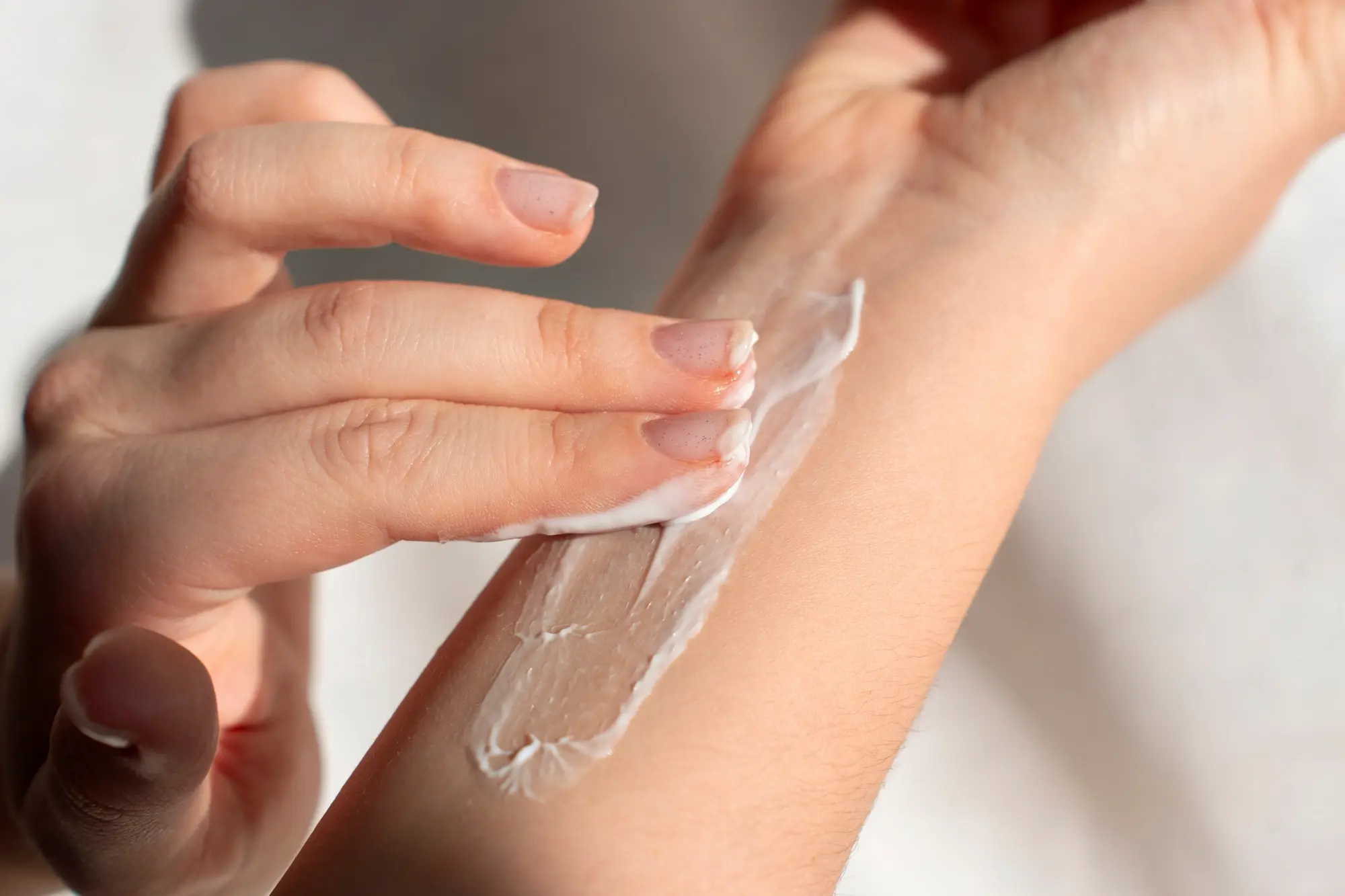
The core reason why collagen creams don’t work lies in their massive, unaltered molecular structure. When you apply a product containing 300,000-Dalton native proteins, the molecules form a thin, invisible film across the surface of your face.
This surface film acts as a humectant, drawing moisture from the surrounding air and temporarily plumping the surface. It can make your face feel smooth to the touch and temporarily reduce the appearance of dry, flaky patches. The moment you wash your face, the film dissolves, and the temporary benefits vanish entirely.
So, does collagen cream work? Standard formulas work purely as surface-level moisturisers. They do not rebuild your internal cellular matrix, and they do not replace the natural proteins lost to age and sun exposure. For a formulation to create lasting structural change, cosmetic chemists must utilise low molecular weight collagen. By drastically shrinking the ingredients, formulators ensure the product bypasses the surface and reaches the deeper layers where true cellular hydration occurs.
The Solution: Hydrolysed Fragments and Advanced Formulations
The solution to the absorption problem is a controlled chemical process known as hydrolysis. When exploring hydrolysed collagen skincare, you are looking at ingredients that have been meticulously broken down using water and specific enzymes.
During the manufacturing process, enzymes cleave the massive, tangled triple-helix proteins into much smaller chains of amino acids. These smaller, separated chains are known as collagen peptides. Because they are a fraction of the original size, these peptides stand a much higher chance of navigating the lipid matrix and sinking into the deeper layers of the epidermis.
High-quality hydrolysed collagen skincare focuses heavily on type I collagen. This specific classification accounts for roughly 80 per cent of the structural protein found in the human dermis. By supplying the skin with the exact building blocks it naturally produces, you provide the raw materials necessary for the body to maintain its own hydration and structural integrity over time. Exploring advanced hydration routines that utilise these targeted peptides is the best way to support your skin’s natural architecture.
Which Type of Collagen Is Worth Paying For in Skincare?
When deciding on a new purchase, you should look for advanced, highly purified variants like atelocollagen. This specific classification goes a step further than basic hydrolysis by removing the terminal ends of the protein structure entirely.
At the end of every natural protein chain are non-helical extensions known as telopeptides. These ends are highly antigenic, meaning they are the parts of the molecule most likely to trigger an immune response or allergic reaction in the human body. By safely removing these reactive ends through specialised enzymatic treatment, scientists yield a remarkably pure, bio-compatible ingredient. This advanced form is widely used in both advanced medical tissue engineering and premium cosmetic formulations.
Because it lacks reactive ends, this purified form is much safer for sensitive skin and absorbs with far greater efficiency. If you are shopping for a reliable collagen cream Singapore residents can use daily, checking the ingredient list for this specific purified form ensures you are investing in safety and efficacy. Identifying the best type of collagen for skincare comes down to finding a product that prioritises this exact level of medical-grade purity.
How to Maximise the Absorption of Your Routine
Even the most scientifically advanced serums require proper application to work effectively. For those asking, “Does topical collagen work when layered with other active ingredients?” the answer is yes, provided you apply the lightest molecular weights first.
Applying a high-quality product over unwashed skin or heavy oils completely blocks absorption. The stratum corneum is already designed to keep things out. Adding a layer of dirt, sebum, and heavy makeup creates an impenetrable wall. Always start your routine with gentle cleansers to remove surface debris without stripping the natural lipid barrier.
Once the skin is clean and slightly damp, apply your peptide-rich serums immediately. Damp skin acts like a sponge, drawing active ingredients deeper into the epidermis faster than dry skin. Wait at least sixty seconds for the low-molecular-weight ingredients to sink in fully before applying thicker lotions or sunscreens. Layering heavy products first will trap your expensive peptides on the surface, entirely negating the benefits of the formulation.
The Role of Medical-Grade Purity in Daily Application

Beyond molecular size, purity dictates how well your skin tolerates a daily application. Many commercial brands use cheap, poorly filtered extracts that contain heavy metals, cellular debris, and inflammatory triggers. When you apply impure ingredients daily, you risk micro-inflammation.
Micro-inflammation accelerates the breakdown of your existing cellular structure, creating a cycle where your anti-ageing cream is actually causing oxidative stress. Investing in clinically formulated options ensures the ingredients have undergone rigorous filtration. Purified ingredients mimic the skin’s natural biology, allowing the tissue to accept the hydration without launching an immune response. This biological harmony is exactly why purified forms like atelocollagen outperform standard cosmetic-grade extracts in clinical settings.
Sourcing Matters: Marine vs Bovine Sources
The origin of the raw material also plays a significant role in purity and absorption. Manufacturers typically source their proteins from either cattle or fish. Comparing marine vs bovine collagen for skin reveals distinct differences in sustainability, molecular size, and biological compatibility.
- Primary Type: Marine sources are overwhelmingly Type I, which perfectly matches human skin. Bovine sources contain a mix of Types I and III.
- Absorption Rate: Marine sources possess naturally smaller particles, allowing for higher absorption. Bovine sources are denser and harder to break down into low-molecular-weight peptides.
- Sustainability: Marine extracts are highly sustainable, often upcycled from fishing industry byproducts. Bovine extracts require significant land, water, and agricultural resources.
- Dietary Restrictions: Marine variants are suitable for pescatarians and are often Halal-certified. Bovine sources are restricted for various dietary and religious groups.
According to research indexed in the National Library of Medicine, marine sources generally feature a lower inherent molecular weight than mammalian sources. This naturally smaller baseline makes marine sources the preferred choice for premium formulations. When researching collagen molecular size skincare, marine sources consistently provide the cleanest, most bio-available base material for creating highly absorbable peptides.
Is Collagen Skincare Worth It?
Yes, but only if you buy a product engineered for deep absorption rather than superficial hydration. Spending money on heavy, native-protein moisturisers will leave you disappointed. Investing in highly purified, low-molecular-weight formulations will dramatically improve your skin’s moisture retention and structural resilience.
When shopping locally, always verify the formulation chemistry before making a purchase. The best collagen serum Singapore has to offer will clearly communicate its molecular size and purification methods on the label. Look for terms like hydrolysed peptides or purified extraction to ensure your money is well spent. Does topical collagen work? It absolutely does, provided you choose science over clever marketing. For a routine built on clinically sound ingredients, you can explore the purified collections available directly at Atelo Singapore.
Frequently Asked Questions
Does topical collagen actually work?
Yes, it works effectively if the formulation utilises a reduced molecular size to allow for proper epidermal penetration.
Can your skin absorb collagen from a cream?
Skin cannot absorb native, large-molecule proteins, but it can easily absorb enzymatically broken-down peptides designed to bypass the surface barrier.
What is the 500 Dalton rule in skincare?
The 500 Dalton rule is a strict scientific principle stating that only molecules weighing under 500 Daltons can successfully penetrate the human skin barrier.
Is hydrolysed collagen better for the skin?
Yes, the hydrolysis process breaks down massive proteins into smaller amino acid chains, making them biologically compatible and capable of deep absorption.
Marine or bovine collagen: which is better for skin?
Marine sources are generally preferred for topical application because they consist primarily of Type I structural proteins and possess a naturally smaller particle size, leading to much better absorption.